Rückenfigur Portraits
This year I've been working more with a compositional device I've always loved: the Rückenfigur, or a person gazing at a view seen from behind. I like how this composition creates a connection between the viewer and the subject as both gaze at the same thing together.
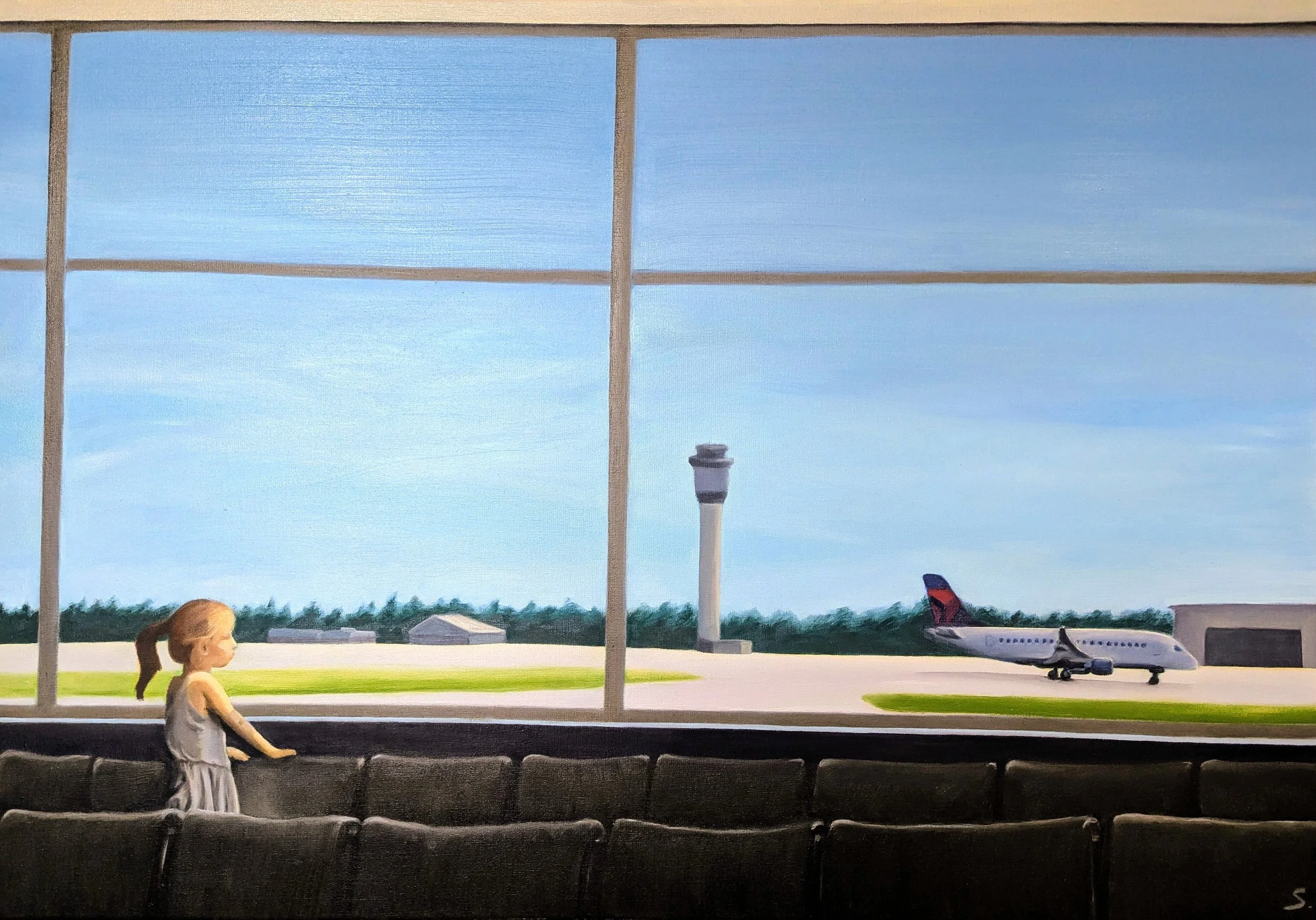
"Airport Window" (oil on canvas, 70 x 100 cm)
I especially like when this composition draws an adult into a child's world. Instead of a grand scene, a child's gaze can pull you into noticing small beautiful sights, like a sunbeam or jellyfish.
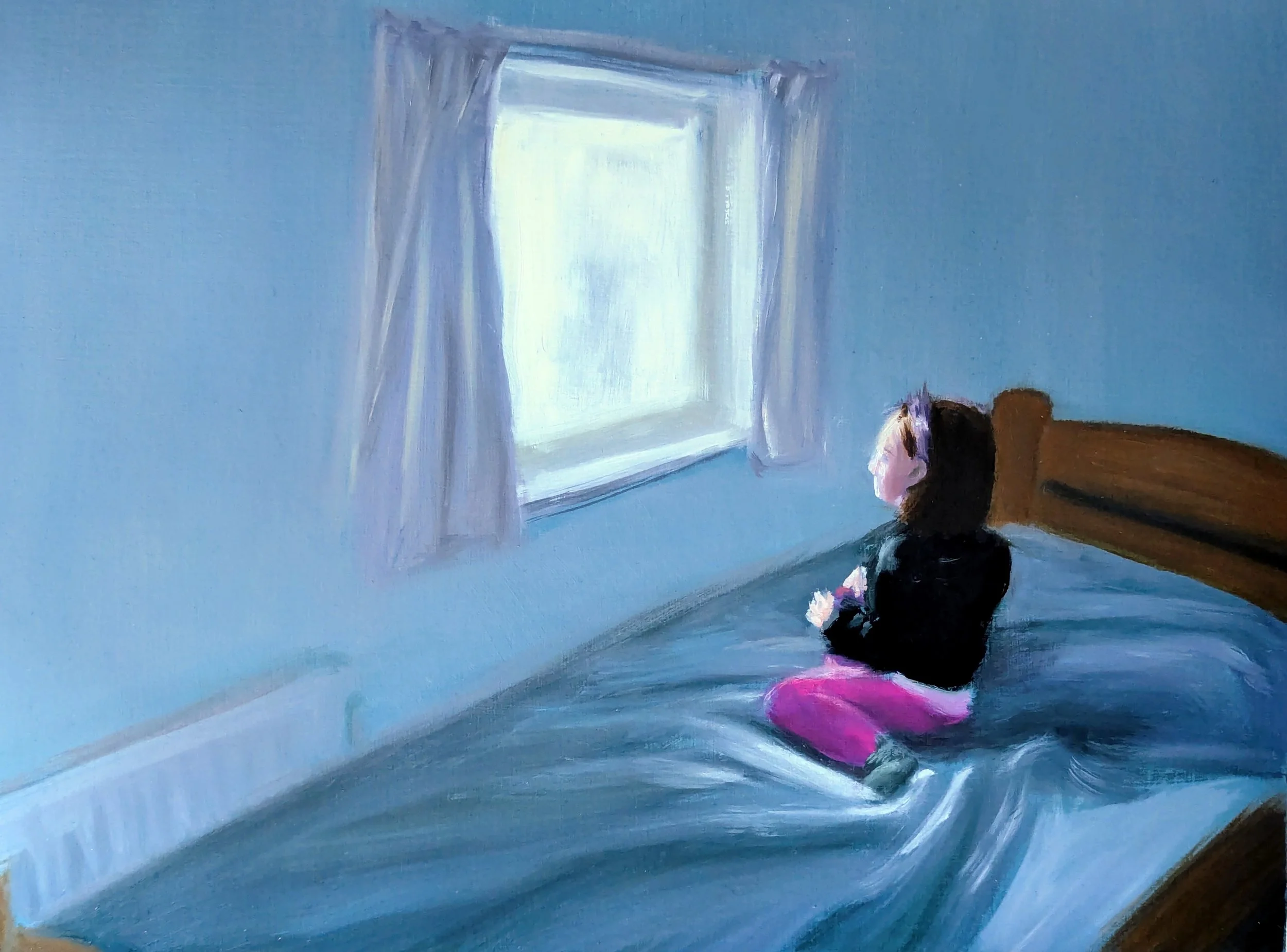
"Window Light" (oil on paper, 30 x 40 cm)
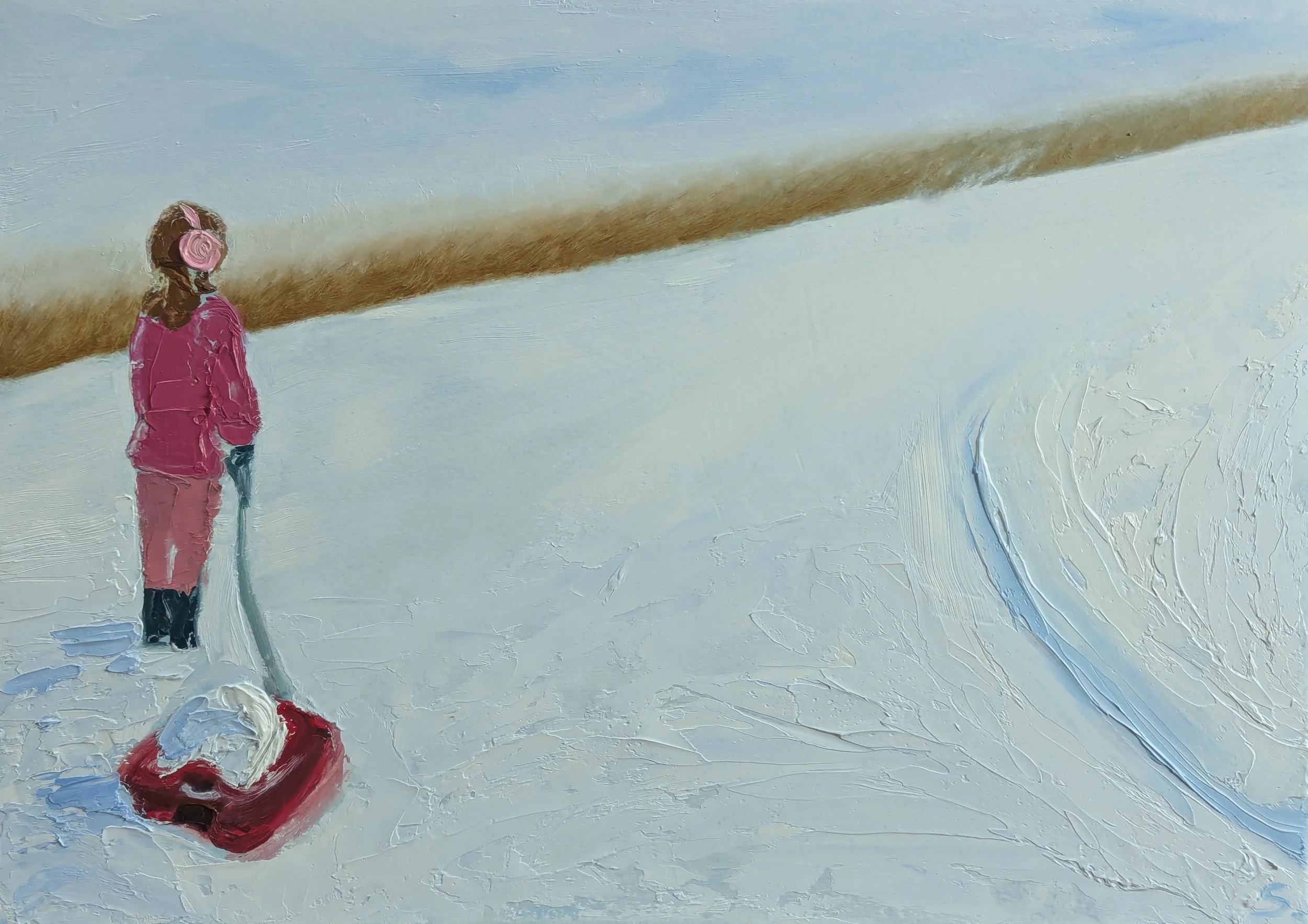
"Snow Day” (oil on paper, 30 × 40 cm)
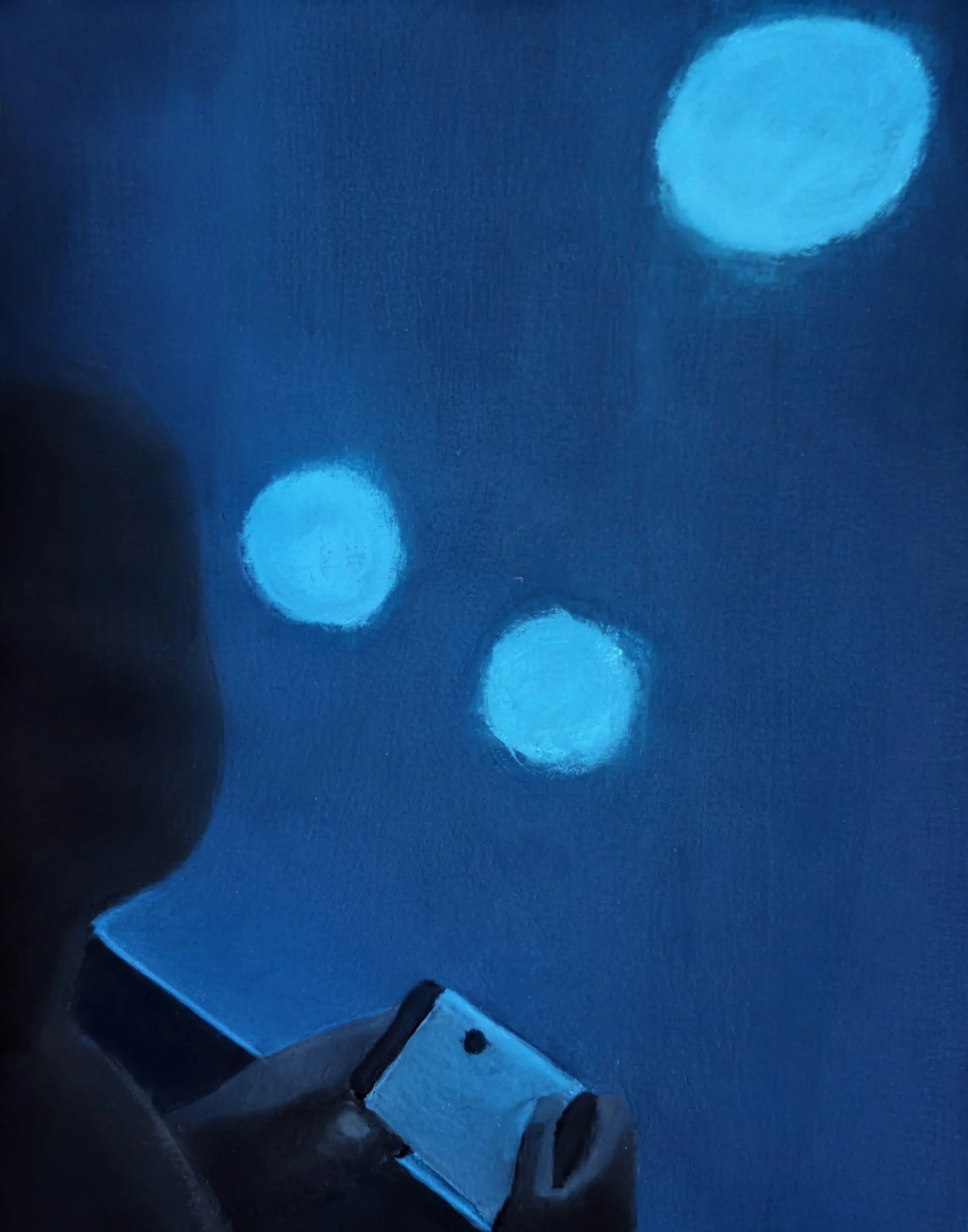
“Glowing Jellyfish” (acrylic on paper, 32.5 × 42 cm)
I also like how this composition can effortlessly blend portraiture with landscapes. Oftentimes portraits pull the viewer's attention away from everything else in a scene, since our eyes are naturally drawn to people. A Rückenfigur will redirect that attention to the scene, so the portrait won't dominate the whole painting.
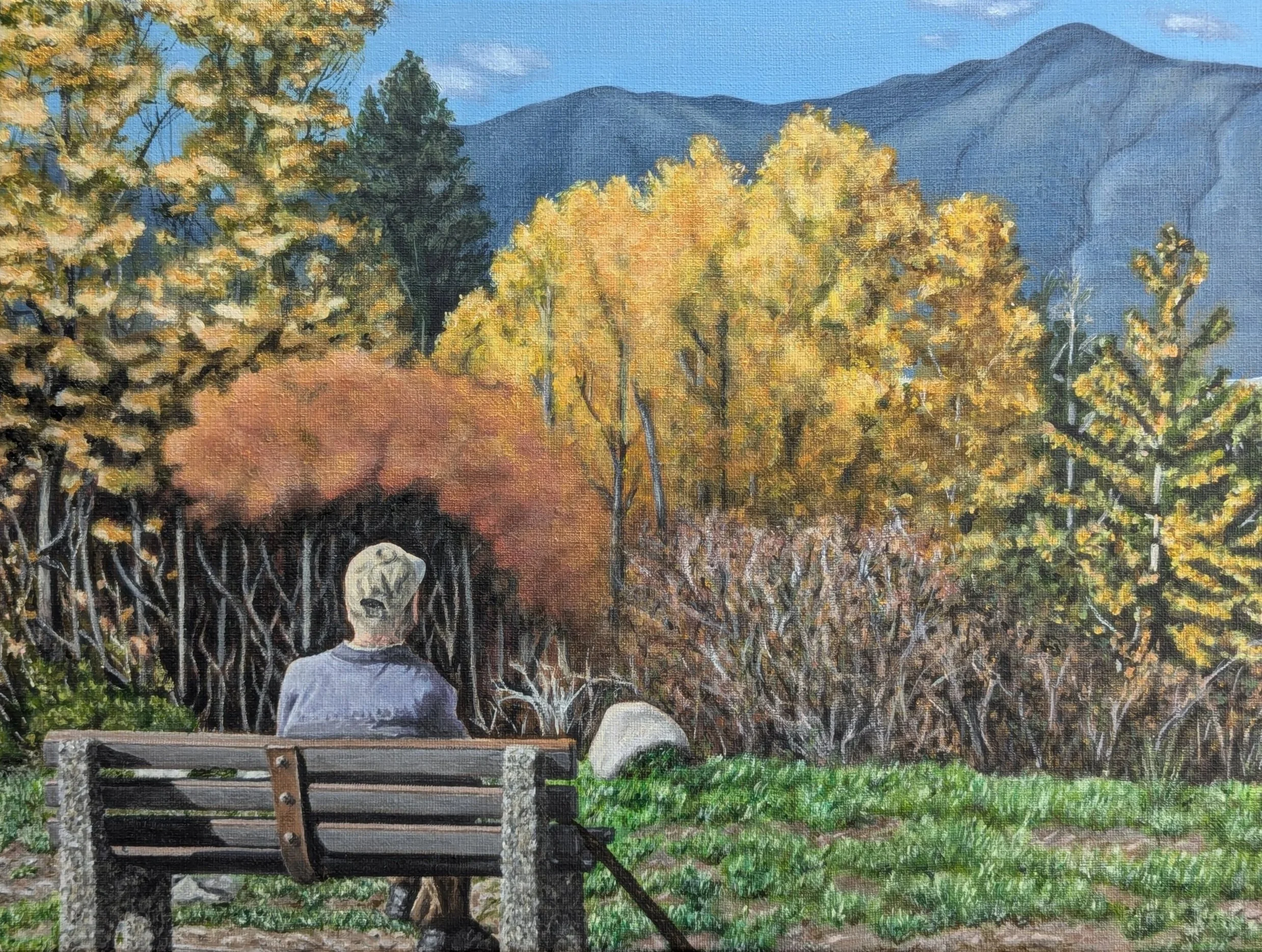
“Opa's Bench” (acrylic on canvas, 30 × 40 cm)
A Rückenfigur can be abstract, too, like in my “Forest Walk” painting below. You don't need detail to give the sense of a person viewed from behind, or to create a lovely scene.
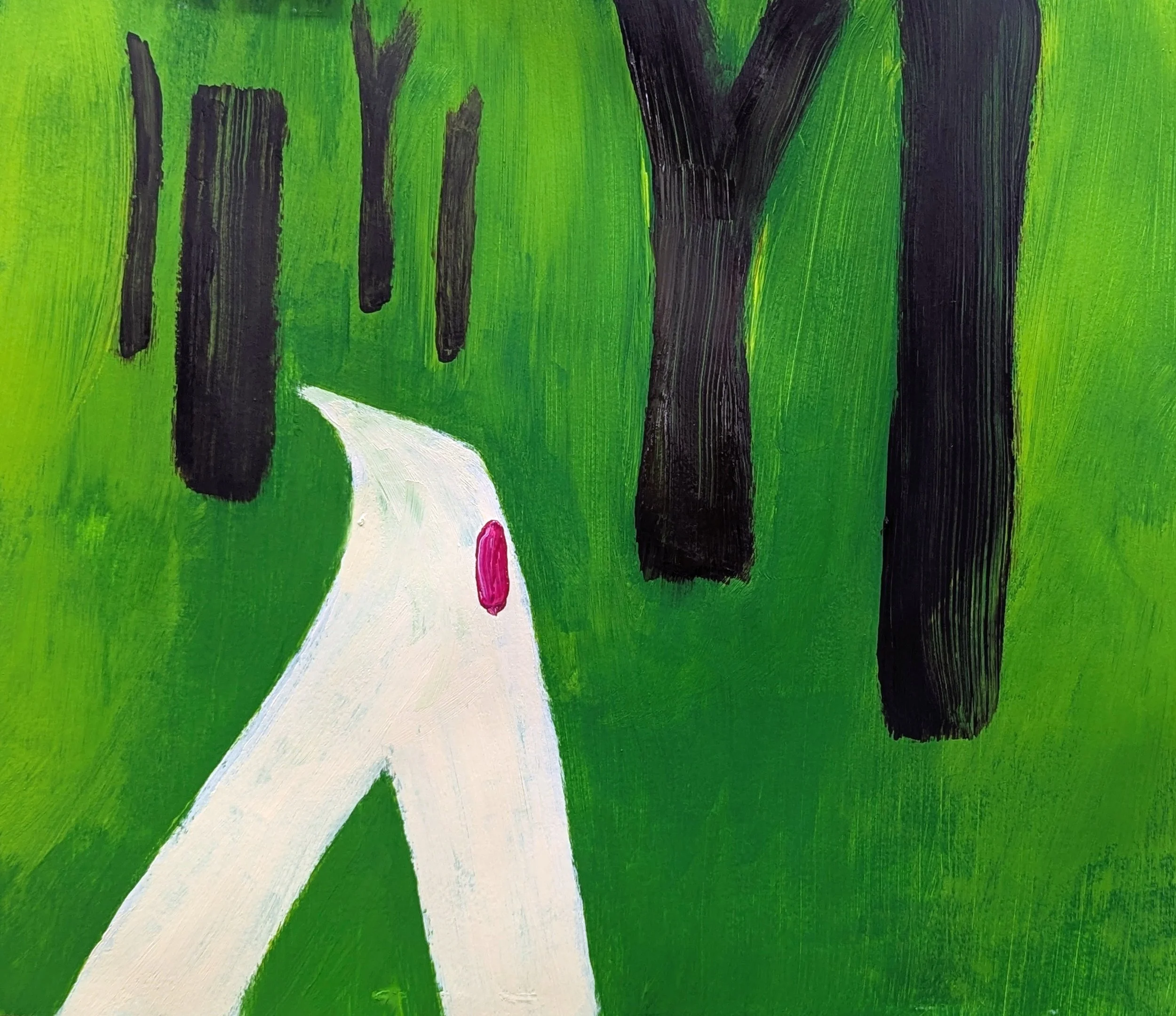
"Forest Walk” (acrylic on paper, 31.5 × 37 cm)
